
 A CLI for Harvester
Harvester does not officially come with a CLI tool, the user is supposed to interact with Harvester mostly through the UI. Though it is theoretically possible to use kubectl to interact with Harvester, the manipulation of Kubevirt YAML objects is absolutely not user friendly. Inspired by tools like multipass from Canonical to easily and rapidly create one of multiple VMs, I began the development of Harvester CLI. Currently, it works but Harvester CLI needs some love to be up-to-date with Harvester v1.0.2 and needs some bug fixes and improvements as well.
Project Description
Harvester CLI is a command line interface tool written in Go, designed to simplify interfacing with a Harvester cluster as a user. It is especially useful for testing purposes as you can easily and rapidly create VMs in Harvester by providing a simple command such as:
harvester vm create my-vm --count 5
to create 5 VMs named my-vm-01 to my-vm-05.

Harvester CLI is functional but needs a number of improvements: up-to-date functionality with Harvester v1.0.2 (some minor issues right now), modifying the default behaviour to create an opensuse VM instead of an ubuntu VM, solve some bugs, etc.
Github Repo for Harvester CLI: https://github.com/belgaied2/harvester-cli
Done in previous Hackweeks
- Create a Github actions pipeline to automatically integrate Harvester CLI to Homebrew repositories: DONE
- Automatically package Harvester CLI for OpenSUSE / Redhat RPMs or DEBs: DONE
Goal for this Hackweek
The goal for this Hackweek is to bring Harvester CLI up-to-speed with latest Harvester versions (v1.3.X and v1.4.X), and improve the code quality as well as implement some simple features and bug fixes.
Some nice additions might be: * Improve handling of namespaced objects * Add features, such as network management or Load Balancer creation ? * Add more unit tests and, why not, e2e tests * Improve CI * Improve the overall code quality * Test the program and create issues for it
Issue list is here: https://github.com/belgaied2/harvester-cli/issues
Resources
The project is written in Go, and using client-go the Kubernetes Go Client libraries to communicate with the Harvester API (which is Kubernetes in fact).
Welcome contributions are:
- Testing it and creating issues
- Documentation
- Go code improvement
What you might learn
Harvester CLI might be interesting to you if you want to learn more about:
- GitHub Actions
- Harvester as a SUSE Product
- Go programming language
- Kubernetes API
- Kubevirt API objects (Manipulating VMs and VM Configuration in Kubernetes using Kubevirt)


This project is part of:
Hack Week 21 Hack Week 22 Hack Week 23 Hack Week 24 Hack Week 25
Activity
Comments
-

over 1 year ago by mohamed.belgaied | Reply
Should we revive this project for the next HackWeek ?
Reply to mohamed.belgaied
YES!!

# A First Level Header ## A Second Level Header Use one asterisk to *emphasize* Use two asterisks for **strong emphasis** - Use hyphens - for unordereed - lists This is an [link to example.com](http://example.com/) This is an image  This is a user link @hans This is a project link hw#some-cool-title
-
-

about 1 year ago by gpuliti | Reply
Is the project ongoing? I might be interested!
I've done something similar a couple of years ago, but more wide services capable https://github.com/Wabri/Imp I had something also for redmine that I was working on, but the laptop where I was working on was of the company I left before suse and sadly I totally forgot to push that feature branch.
-
4 months ago by mohamed.belgaied | Reply
Yes, the project lives, it is just relying on my availability, which means, whenever I have time... But I would love to contribute again. Definitely planning to add it to Hackweek25.
-
Similar Projects
SUSE Virtualization (Harvester): VM Import UI flow by wombelix
Description
SUSE Virtualization (Harvester) has a vm-import-controller that allows migrating VMs from VMware and OpenStack, but users need to write manifest files and apply them with kubectl to use it. This project is about adding the missing UI pieces to the harvester-ui-extension, making VM Imports accessible without requiring Kubernetes and YAML knowledge.
VMware and OpenStack admins aren't automatically familiar with Kubernetes and YAML. Implementing the UI part for the VM Import feature makes it easier to use and more accessible. The Harvester Enhancement Proposal (HEP) VM Migration controller included a UI flow implementation in its scope. Issue #2274 received multiple comments that an UI integration would be a nice addition, and issue #4663 was created to request the implementation but eventually stalled.
Right now users need to manually create either VmwareSource or OpenstackSource resources, then write VirtualMachineImport manifests with network mappings and all the other configuration options. Users should be able to do that and track import status through the UI without writing YAML.
Work during the Hack Week will be done in this fork in a branch called suse-hack-week-25, making progress publicly visible and open for contributions. When everything works out and the branch is in good shape, it will be submitted as a pull request to harvester-ui-extension to get it included in the next Harvester release.
Testing will focus on VMware since that's what is available in the lab environment (SUSE Virtualization 1.6 single-node cluster, ESXi 8.0 standalone host). Given that this is about UI and surfacing what the vm-import-controller handles, the implementation should work for OpenStack imports as well.
This project is also a personal challenge to learn vue.js and get familiar with Rancher Extensions development, since harvester-ui-extension is built on that framework.
Goals
- Learn Vue.js and Rancher Extensions fundamentals required to finish the project
- Read and learn from other Rancher UI Extensions code, especially understanding the
harvester-ui-extensioncode base - Understand what the
vm-import-controllerand its CRDs require, identify ready to use components in the Rancher UI Extension API that can be leveraged - Implement UI logic for creating and managing
VmwareSource/OpenstackSourceandVirtualMachineImportresources with all relevant configuration options and credentials - Implemnt UI elements to display
VirtualMachineImportstatus and errors
Resources
HEP and related discussion
- https://github.com/harvester/harvester/blob/master/enhancements/20220726-vm-migration.md
- https://github.com/harvester/harvester/issues/2274
- https://github.com/harvester/harvester/issues/4663
SUSE Virtualization VM Import Documentation
Rancher Extensions Documentation
Rancher UI Plugin Examples
Vue Router Essentials
Vue Router API
Vuex Documentation
Extracting, converting and importing VMs from Nutanix into SUSE Virtualization by emendonca
Description
The idea is to delve into understanding Nutanix AHV internals on how it stores and runs VMs, and how to extract them in an automated way for importing into a KVM-compatible hypervisor, like SUSE Virtualization/Harvester. The final product will be not only be documentation, but a working prototype that can be used to automate the process.
Goals
1) document how to create a simple lab with NutaniX AHV community edition 2) determine the basic elements we need to interact with 3) determine what are the best paths to grab the images through, balancing speed and complexity 4) document possible issues and create a roadmap for tackling them 4) should we adapt an existing solution or implement a new one? 5) implement the solution!
Resources
Similar project I created: https://github.com/doccaz/vm-import-ui Nutanix AHV forums Nutanix technical bulletins
Cluster API Provider for Harvester by rcase
Project Description
The Cluster API "infrastructure provider" for Harvester, also named CAPHV, makes it possible to use Harvester with Cluster API. This enables people and organisations to create Kubernetes clusters running on VMs created by Harvester using a declarative spec.
The project has been bootstrapped in HackWeek 23, and its code is available here.
Work done in HackWeek 2023
- Have a early working version of the provider available on Rancher Sandbox : *DONE *
- Demonstrated the created cluster can be imported using Rancher Turtles: DONE
- Stretch goal - demonstrate using the new provider with CAPRKE2: DONE and the templates are available on the repo
DONE in HackWeek 24:
- Add more Unit Tests
- Improve Status Conditions for some phases
- Add cloud provider config generation
- Testing with Harvester v1.3.2
- Template improvements
- Issues creation
DONE in 2025 (out of Hackweek)
- Support of ClusterClass
- Add to
clusterctlcommunity providers, you can add it directly withclusterctl - Testing on newer versions of Harvester v1.4.X and v1.5.X
- Support for
clusterctl generate cluster ... - Improve Status Conditions to reflect current state of Infrastructure
- Improve CI (some bugs for release creation)
Goals for HackWeek 2025
- FIRST and FOREMOST, any topic is important to you
- Add e2e testing
- Certify the provider for Rancher Turtles
- Add Machine pool labeling
- Add PCI-e passthrough capabilities.
- Other improvement suggestions are welcome!
Thanks to @isim and Dominic Giebert for their contributions!
Resources
Looking for help from anyone interested in Cluster API (CAPI) or who wants to learn more about Harvester.
This will be an infrastructure provider for Cluster API. Some background reading for the CAPI aspect:
OpenPlatform Self-Service Portal by tmuntan1
Description
In SUSE IT, we developed an internal developer platform for our engineers using SUSE technologies such as RKE2, SUSE Virtualization, and Rancher. While it works well for our existing users, the onboarding process could be better.
To improve our customer experience, I would like to build a self-service portal to make it easy for people to accomplish common actions. To get started, I would have the portal create Jira SD tickets for our customers to have better information in our tickets, but eventually I want to add automation to reduce our workload.
Goals
- Build a frontend website (Angular) that helps customers create Jira SD tickets.
- Build a backend (Rust with Axum) for the backend, which would do all the hard work for the frontend.
Resources (SUSE VPN only)
- development site: https://ui-dev.openplatform.suse.com/login?returnUrl=%2Fopenplatform%2Fforms
- https://gitlab.suse.de/itpe/core/open-platform/op-portal/backend
- https://gitlab.suse.de/itpe/core/open-platform/op-portal/frontend
Self-Scaling LLM Infrastructure Powered by Rancher by ademicev0
Self-Scaling LLM Infrastructure Powered by Rancher

Description
The Problem
Running LLMs can get expensive and complex pretty quickly.
Today there are typically two choices:
- Use cloud APIs like OpenAI or Anthropic. Easy to start with, but costs add up at scale.
- Self-host everything - set up Kubernetes, figure out GPU scheduling, handle scaling, manage model serving... it's a lot of work.
What if there was a middle ground?
What if infrastructure scaled itself instead of making you scale it?
Can we use existing Rancher capabilities like CAPI, autoscaling, and GitOps to make this simpler instead of building everything from scratch?
Project Repository: github.com/alexander-demicev/llmserverless
What This Project Does
A key feature is hybrid deployment: requests can be routed based on complexity or privacy needs. Simple or low-sensitivity queries can use public APIs (like OpenAI), while complex or private requests are handled in-house on local infrastructure. This flexibility allows balancing cost, privacy, and performance - using cloud for routine tasks and on-premises resources for sensitive or demanding workloads.
A complete, self-scaling LLM infrastructure that:
- Scales to zero when idle (no idle costs)
- Scales up automatically when requests come in
- Adds more nodes when needed, removes them when demand drops
- Runs on any infrastructure - laptop, bare metal, or cloud
Think of it as "serverless for LLMs" - focus on building, the infrastructure handles itself.
How It Works
A combination of open source tools working together:
Flow:
- Users interact with OpenWebUI (chat interface)
- Requests go to LiteLLM Gateway
- LiteLLM routes requests to:
- Ollama (Knative) for local model inference (auto-scales pods)
- Or cloud APIs for fallback
Cluster API Provider for Harvester by rcase
Project Description
The Cluster API "infrastructure provider" for Harvester, also named CAPHV, makes it possible to use Harvester with Cluster API. This enables people and organisations to create Kubernetes clusters running on VMs created by Harvester using a declarative spec.
The project has been bootstrapped in HackWeek 23, and its code is available here.
Work done in HackWeek 2023
- Have a early working version of the provider available on Rancher Sandbox : *DONE *
- Demonstrated the created cluster can be imported using Rancher Turtles: DONE
- Stretch goal - demonstrate using the new provider with CAPRKE2: DONE and the templates are available on the repo
DONE in HackWeek 24:
- Add more Unit Tests
- Improve Status Conditions for some phases
- Add cloud provider config generation
- Testing with Harvester v1.3.2
- Template improvements
- Issues creation
DONE in 2025 (out of Hackweek)
- Support of ClusterClass
- Add to
clusterctlcommunity providers, you can add it directly withclusterctl - Testing on newer versions of Harvester v1.4.X and v1.5.X
- Support for
clusterctl generate cluster ... - Improve Status Conditions to reflect current state of Infrastructure
- Improve CI (some bugs for release creation)
Goals for HackWeek 2025
- FIRST and FOREMOST, any topic is important to you
- Add e2e testing
- Certify the provider for Rancher Turtles
- Add Machine pool labeling
- Add PCI-e passthrough capabilities.
- Other improvement suggestions are welcome!
Thanks to @isim and Dominic Giebert for their contributions!
Resources
Looking for help from anyone interested in Cluster API (CAPI) or who wants to learn more about Harvester.
This will be an infrastructure provider for Cluster API. Some background reading for the CAPI aspect:
The Agentic Rancher Experiment: Do Androids Dream of Electric Cattle? by moio
Rancher is a beast of a codebase. Let's investigate if the new 2025 generation of GitHub Autonomous Coding Agents and Copilot Workspaces can actually tame it. 
The Plan
Create a sandbox GitHub Organization, clone in key Rancher repositories, and let the AI loose to see if it can handle real-world enterprise OSS maintenance - or if it just hallucinates new breeds of Kubernetes resources!
Specifically, throw "Agentic Coders" some typical tasks in a complex, long-lived open-source project, such as:
❥ The Grunt Work: generate missing GoDocs, unit tests, and refactorings. Rebase PRs.
❥ The Complex Stuff: fix actual (historical) bugs and feature requests to see if they can traverse the complexity without (too much) human hand-holding.
❥ Hunting Down Gaps: find areas lacking in docs, areas of improvement in code, dependency bumps, and so on.
If time allows, also experiment with Model Context Protocol (MCP) to give agents context on our specific build pipelines and CI/CD logs.
Why?
We know AI can write "Hello World." and also moderately complex programs from a green field. But can it rebase a 3-month-old PR with conflicts in rancher/rancher? I want to find the breaking point of current AI agents to determine if and how they can help us to reduce our technical debt, work faster and better. At the same time, find out about pitfalls and shortcomings.
The CONCLUSION!!!
A  State of the Union document was compiled to summarize lessons learned this week. For more gory details, just read on the diary below!
Preparing KubeVirtBMC for project transfer to the KubeVirt organization by zchang
Description
KubeVirtBMC is preparing to transfer the project to the KubeVirt organization. One requirement is to enhance the modeling design's security. The current v1alpha1 API (the VirtualMachineBMC CRD) was designed during the proof-of-concept stage. It's immature and inherently insecure due to its cross-namespace object references, exposing security concerns from an RBAC perspective.
The other long-awaited feature is the ability to mount virtual media so that virtual machines can boot from remote ISO images.
Goals
- Deliver the v1beta1 API and its corresponding controller implementation
- Enable the Redfish virtual media mount function for KubeVirt virtual machines
Resources
- The KubeVirtBMC repo: https://github.com/starbops/kubevirtbmc
- The new v1beta1 API: https://github.com/starbops/kubevirtbmc/issues/83
- Redfish virtual media mount: https://github.com/starbops/kubevirtbmc/issues/44
Preparing KubeVirtBMC for project transfer to the KubeVirt organization by zchang
Description
KubeVirtBMC is preparing to transfer the project to the KubeVirt organization. One requirement is to enhance the modeling design's security. The current v1alpha1 API (the VirtualMachineBMC CRD) was designed during the proof-of-concept stage. It's immature and inherently insecure due to its cross-namespace object references, exposing security concerns from an RBAC perspective.
The other long-awaited feature is the ability to mount virtual media so that virtual machines can boot from remote ISO images.
Goals
- Deliver the v1beta1 API and its corresponding controller implementation
- Enable the Redfish virtual media mount function for KubeVirt virtual machines
Resources
- The KubeVirtBMC repo: https://github.com/starbops/kubevirtbmc
- The new v1beta1 API: https://github.com/starbops/kubevirtbmc/issues/83
- Redfish virtual media mount: https://github.com/starbops/kubevirtbmc/issues/44
SUSE KVM Best Practices - Focus on SAP Workloads and Use Cases by roseswe
Description
SUSE Best Practices around KVM, especially for SAP workloads. Early Google presentation already made from various customer projects and SUSE sources.
Goals
- Complete presentation we can reuse in SUSE Consulting projects
- 2025: Bring it to version 1.00 ready for customers
Resources
KVM (virt-manager) images
SUSE/SAP/KVM Best Practices
- https://documentation.suse.com/en-us/sles/15-SP6/single-html/SLES-virtualization/
- SAP Note 1522993 - "Linux: SAP on SUSE KVM - Kernel-based Virtual Machine" && 2284516 - SAP HANA virtualized on SUSE Linux Enterprise hypervisors https://me.sap.com/notes/2284516
- SUSECon24: [TUTORIAL-1253] Virtualizing SAP workloads with SUSE KVM || https://youtu.be/PTkpRVpX2PM
- SUSE Best Practices for SAP HANA on KVM - https://documentation.suse.com/sbp/sap-15/html/SBP-SLES4SAP-HANAonKVM-SLES15SP4/index.html
Reassess HiFive Premier P550 board (for RISC-V virtualization) by a_faerber
Description
With growing interest in the RISC-V instruction set architecture, we need to re-evaluate ways of building packages for it:
Currently openSUSE OBS is using x86_64 build workers, using QEMU userspace-level (syscall) emulation inside KVM VMs. Occasionally this setup causes build failures, due to timing differences or incomplete emulation. Andreas Schwab and others have collected workarounds in projects like openSUSE:Factory:RISCV to deal with some of those issues.
Ideally we would be using native riscv64 KVM VMs instead. This requires CPUs with the H extension. Two generally available development boards feature the ESWIN 7700X System-on-Chip with SiFive P550 CPUs, HiFive Premier P550 and Milk-V Megrez. We've had access to the HiFive Premier P550 for some time now, but the early version (based on Yocto) had issues with the bootloader, and reportedly later boards were booting to a dracut emergency shell for lack of block device drivers.
Goals
- Update the boot firmware
- Test whether and how far openSUSE Tumbleweed boots
Results
- Boot firmware image 2025.11.00 successfully flashed onto board
- Enables UEFI boot in U-Boot by default
- U-Boot's embedded Flat Device Tree is lacking a timebase-frequency, required for recent (6.16.3) mainline kernels (panic leading to reset, visible via earlycon=sbi)
- Tested eswin/eic7700-hifive-premier-p550.dtb from Ubuntu 2025.11.00 image
- Allows to boot past the above panic, but times out in JeOS image while waiting for block device, dropping to dracut emergency shell
- No devices shown in lsblk -- 6.16 appears to be lacking device drivers still
Resources
Rewrite Distrobox in go (POC) by fabriziosestito
Description
Rewriting Distrobox in Go.
Main benefits:
- Easier to maintain and to test
- Adapter pattern for different container backends (LXC, systemd-nspawn, etc.)
Goals
- Build a minimal starting point with core commands
- Keep the CLI interface compatible: existing users shouldn't notice any difference
- Use a clean Go architecture with adapters for different container backends
- Keep dependencies minimal and binary size small
- Benchmark against the original shell script
Resources
- Upstream project: https://github.com/89luca89/distrobox/
- Distrobox site: https://distrobox.it/
- ArchWiki: https://wiki.archlinux.org/title/Distrobox
Play with the userfaultfd(2) system call and download on demand using HTTP Range Requests with Golang by rbranco
Description
The userfaultfd(2) is a cool system call to handle page faults in user-space. This should allow me to list the contents of an ISO or similar archive without downloading the whole thing. The userfaultfd(2) part can also be done in theory with the PROT_NONE mprotect + SIGSEGV trick, for complete Unix portability, though reportedly being slower.
Goals
- Create my own library for userfaultfd(2) in Golang.
- Create my own library for HTTP Range Requests.
- Complete portability with Unix.
- Benchmarks.
- Contribute some tests to LTP.
Resources
- https://docs.kernel.org/admin-guide/mm/userfaultfd.html
- https://www.cons.org/cracauer/cracauer-userfaultfd.html
Create a go module to wrap happy-compta.fr by cbosdonnat
Description
https://happy-compta.fr is a tool for french work councils simple book keeping. While it does the job, it has no API to work with and it is tedious to enter loads of operations.
Goals
Write a go client module to be used as an API to programmatically manipulate the tool.
Writing an example tool to load data from a CSV file would be good too.
HTTP API for nftables by crameleon
Background
The idea originated in https://progress.opensuse.org/issues/164060 and is about building RESTful API which translates authorized HTTP requests to operations in nftables, possibly utilizing libnftables-json(5).
Originally, I started developing such an interface in Go, utilizing https://github.com/google/nftables. The conversion of string networks to nftables set elements was problematic (unfortunately no record of details), and I started a second attempt in Python, which made interaction much simpler thanks to native nftables Python bindings.
Goals
- Find and track the issue with google/nftables
- Revisit and polish the Go or Python code (prefer Go, but possibly depends on implementing missing functionality), primarily the server component
- Finish functionality to interact with nftables sets (retrieving and updating elements), which are of interest for the originating issue
- Align test suite
- Packaging
Resources
- https://git.netfilter.org/nftables/tree/py/src/nftables.py
- https://git.com.de/Georg/nftables-http-api (to be moved to GitHub)
- https://build.opensuse.org/package/show/home:crameleon:containers/pytest-nftables-container
Results
- Started new https://github.com/tacerus/nftables-http-api.
- First Go nftables issue was related to set elements needing to be added with different start and end addresses - coincidentally, this was recently discovered by someone else, who added a useful helper function for this: https://github.com/google/nftables/pull/342.
- Further improvements submitted: https://github.com/google/nftables/pull/347.
Side results
Upon starting to unify the structure and implementing more functionality, missing JSON output support was noticed for some subcommands in libnftables. Submitted patches here as well:
- https://lore.kernel.org/netfilter-devel/20251203131736.4036382-2-georg@syscid.com/T/#u
Cluster API Provider for Harvester by rcase
Project Description
The Cluster API "infrastructure provider" for Harvester, also named CAPHV, makes it possible to use Harvester with Cluster API. This enables people and organisations to create Kubernetes clusters running on VMs created by Harvester using a declarative spec.
The project has been bootstrapped in HackWeek 23, and its code is available here.
Work done in HackWeek 2023
- Have a early working version of the provider available on Rancher Sandbox : *DONE *
- Demonstrated the created cluster can be imported using Rancher Turtles: DONE
- Stretch goal - demonstrate using the new provider with CAPRKE2: DONE and the templates are available on the repo
DONE in HackWeek 24:
- Add more Unit Tests
- Improve Status Conditions for some phases
- Add cloud provider config generation
- Testing with Harvester v1.3.2
- Template improvements
- Issues creation
DONE in 2025 (out of Hackweek)
- Support of ClusterClass
- Add to
clusterctlcommunity providers, you can add it directly withclusterctl - Testing on newer versions of Harvester v1.4.X and v1.5.X
- Support for
clusterctl generate cluster ... - Improve Status Conditions to reflect current state of Infrastructure
- Improve CI (some bugs for release creation)
Goals for HackWeek 2025
- FIRST and FOREMOST, any topic is important to you
- Add e2e testing
- Certify the provider for Rancher Turtles
- Add Machine pool labeling
- Add PCI-e passthrough capabilities.
- Other improvement suggestions are welcome!
Thanks to @isim and Dominic Giebert for their contributions!
Resources
Looking for help from anyone interested in Cluster API (CAPI) or who wants to learn more about Harvester.
This will be an infrastructure provider for Cluster API. Some background reading for the CAPI aspect:
SUSE Health Check Tools by roseswe
SUSE HC Tools Overview
A collection of tools written in Bash or Go 1.24++ to make life easier with handling of a bunch of tar.xz balls created by supportconfig.
Background: For SUSE HC we receive a bunch of supportconfig tar balls to check them for misconfiguration, areas for improvement or future changes.
Main focus on these HC are High Availability (pacemaker), SLES itself and SAP workloads, esp. around the SUSE best practices.
Goals
- Overall improvement of the tools
- Adding new collectors
- Add support for SLES16
Resources
csv2xls* example.sh go.mod listprodids.txt sumtext* trails.go README.md csv2xls.go exceltest.go go.sum m.sh* sumtext.go vercheck.py* config.ini csvfiles/ getrpm* listprodids* rpmdate.sh* sumxls* verdriver* credtest.go example.py getrpm.go listprodids.go sccfixer.sh* sumxls.go verdriver.go
docollall.sh* extracthtml.go gethostnamectl* go.sum numastat.go cpuvul* extractcluster.go firmwarebug* gethostnamectl.go m.sh* numastattest.go cpuvul.go extracthtml* firmwarebug.go go.mod numastat* xtr_cib.sh*
$ getrpm -r pacemaker
>> Product ID: 2795 (SUSE Linux Enterprise Server for SAP Applications 15 SP7 x86_64), RPM Name:
+--------------+----------------------------+--------+--------------+--------------------+
| Package Name | Version                    | Arch   | Release      | Repository         |
+--------------+----------------------------+--------+--------------+--------------------+
| pacemaker    | 2.1.10+20250718.fdf796ebc8 | x86_64 | 150700.3.3.1 | sle-ha/15.7/x86_64 |
| pacemaker    | 2.1.9+20250410.471584e6a2  | x86_64 | 150700.1.9   | sle-ha/15.7/x86_64 |
+--------------+----------------------------+--------+--------------+--------------------+
Total packages found: 2
terraform-provider-feilong by e_bischoff
Project Description
People need to test operating systems and applications on s390 platform. While this is straightforward with KVM, this is very difficult with z/VM.
IBM Cloud Infrastructure Center (ICIC) harnesses the Feilong API, but you can use Feilong without installing ICIC(see this schema).
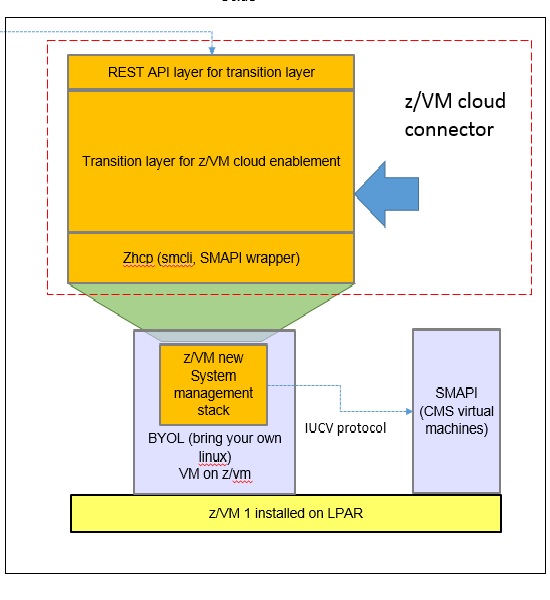
What about writing a terraform Feilong provider, just like we have the terraform libvirt provider? That would allow to transparently call Feilong from your main.tf files to deploy and destroy resources on your z/VM system.
Goal for Hackweek 23
I would like to be able to easily deploy and provision VMs automatically on a z/VM system, in a way that people might enjoy even outside of SUSE.
My technical preference is to write a terraform provider plugin, as it is the approach that involves the least software components for our deployments, while remaining clean, and compatible with our existing development infrastructure.
Goals for Hackweek 24
Feilong provider works and is used internally by SUSE Manager team. Let's push it forward!
Let's add support for fiberchannel disks and multipath.
Goals for Hackweek 25
Modernization, maturity, and maintenance: support for SLES 16 and openTofu, new API calls, fixes...
Resources
Outcome
Q2Boot - A handy QEMU VM launcher by amanzini
Description
Q2Boot (Qemu Quick Boot) is a command-line tool that wraps QEMU to provide a streamlined experience for launching virtual machines. It automatically configures common settings like KVM acceleration, virtio drivers, and networking while allowing customization through both configuration files and command-line options.
The project originally was a personal utility in D, now recently rewritten in idiomatic Go. It lives at repository https://github.com/ilmanzo/q2boot
Goals
Improve the project, testing with different scenarios , address issues and propose new features. It will benefit of some basic integration testing by providing small sample disk images.
Updates
- Dec 1, 2025 : refactor command line options, added structured logging. Released v0.0.2
- Dec 2, 2025 : added external monitor via telnet option
- Dec 4, 2025 : released v0.0.3 with architecture auto-detection
- Dec 5, 2025 : filing new issues and general polishment. Designing E2E testing
Resources
Create a go module to wrap happy-compta.fr by cbosdonnat
Description
https://happy-compta.fr is a tool for french work councils simple book keeping. While it does the job, it has no API to work with and it is tedious to enter loads of operations.
Goals
Write a go client module to be used as an API to programmatically manipulate the tool.
Writing an example tool to load data from a CSV file would be good too.
Contribute to terraform-provider-libvirt by pinvernizzi
Description
The SUSE Manager (SUMA) teams' main tool for infrastructure automation, Sumaform, largely relies on terraform-provider-libvirt. That provider is also widely used by other teams, both inside and outside SUSE.
It would be good to help the maintainers of this project and give back to the community around it, after all the amazing work that has been already done.
If you're interested in any of infrastructure automation, Terraform, virtualization, tooling development, Go (...) it is also a good chance to learn a bit about them all by putting your hands on an interesting, real-use-case and complex project.
Goals
- Get more familiar with Terraform provider development and libvirt bindings in Go
- Solve some issues and/or implement some features
- Get in touch with the community around the project
Resources
- CONTRIBUTING readme
- Go libvirt library in use by the project
- Terraform plugin development
- "Good first issue" list
Kudos aka openSUSE Recognition Platform by lkocman
Description
Relevant blog post at news-o-o
I started the Kudos application shortly after Leap 16.0 to create a simple, friendly way to recognize people for their work and contributions to openSUSE. There’s so much more to our community than just submitting requests in OBS or gitea we have translations (not only in Weblate), wiki edits, forum and social media moderation, infrastructure maintenance, booth participation, talks, manual testing, openQA test suites, and more!
Goals
Kudos under github.com/openSUSE/kudos with build previews aka netlify
Have a kudos.opensuse.org instance running in production
Build an easy-to-contribute recognition platform for the openSUSE community a place where everyone can send and receive appreciation for their work, across all areas of contribution.
In the future, we could even explore reward options such as vouchers for t-shirts or other community swag, small tokens of appreciation to make recognition more tangible.
Resources
(Do not create new badge requests during hackweek, unless you'll make the badge during hackweek)
- Source code: openSUSE/kudos
- Badges: openSUSE/kudos-badges
- Issue tracker: kudos/issues
Switch software-o-o to store repomd in a database by hennevogel
Description
The openSUSE Software portal is a web app to explore binary packages of openSUSE distributions. Kind of like an package manager / app store.
https://software.opensuse.org/
This app has been around forever (August 2007) and it's architecture is a bit brittle. It acts as a frontend to the OBS distributions and published binary search APIs, calculates and caches a lot of stuff in memory and needs code changes nearly every openSUSE release to keep up.
As you can imagine, it's a heavy user of the OBS API, especially when caches are cold.
Goals
I want to change the app to cache repomod data in a (postgres) database structure
- Distributions have many Repositories
- Repositories have many Packages
- Packages have many Patches
The UI workflows will be as following
- As an admin I setup Distribution and it's repositories
- As an admin I sync all repositories repomd files into to the database
- As a user I browse a Distribution by category
- As a user I search for Package of a Distribution in it's Repositories
- As a user I extend the search to Package build on OBS for this Distribution
This has a couple of pro's:
- Less traffic on the OBS API as the usual Packages are inside the database
- Easier base to add features to this page. Like comments, ratings, openSUSE specific screenshots etc.
- Separating the Distribution package search from searching through OBS will hopefully make more clear for newbies that enabling extra repositories is kind of dangerous.
And one con:
- You can't search for packages build for foreign distributions with this app anymore (although we could consume their repomd etc. but I doubt we have the audience on an opensuse.org domain...)
TODO
 Introduce a PG database
- Add clockworkd as scheduler and delayed_job as ActiveJob backend
- Introduce ActiveStorage
- Build initial data model
- Introduce repomd to database sync
- Adapt repomd sync to Leap 16.0 repomod layout changes (single arch, no update repo)
 Make repomd sync idempotent
- Introduce database search
- Setup foreman to run
rails sandrake jobs:workoff - Adapt UI
- Build Category Browsing
- Build Admin Distribution CRUD interface
Create a page with all devel:languages:perl packages and their versions by tinita
Description
Perl projects now live in git: https://src.opensuse.org/perl
It would be useful to have an easy way to check which version of which perl module is in devel:languages:perl. Also we have meta overrides and patches for various modules, and it would be good to have them at a central place, so it is easier to lookup, and we can share with other vendors.
I did some initial data dump here a while ago: https://github.com/perlpunk/cpan-meta
But I never had the time to automate this.
I can also use the data to check if there are necessary updates (currently it uses data from download.opensuse.org, so there is some delay and it depends on building).
Goals
- Have a script that updates a central repository (e.g.
https://src.opensuse.org/perl/_metadata) with metadata by looking at https://src.opensuse.org/perl/_ObsPrj (check if there are any changes from the last run) - Create a HTML page with the list of packages (use Javascript and some table library to make it easily searchable)
Resources
Results
Day 1
- First part of the code which retrieves data from https://src.opensuse.org/perl/_ObsPrj with submodules and creates a YAML and a JSON file.
- Repo: https://github.com/perlpunk/opensuse-perl-meta
- Also a first version of the HTML is live: https://perlpunk.github.io/opensuse-perl-meta/
Day 2
- HTML Page has now links to src.opensuse.org and the date of the last update, plus a short info at the top
- Code is now 100% covered by tests: https://app.codecov.io/gh/perlpunk/opensuse-perl-meta
- I used the modern perl
classfeature, which makes perl classes even nicer and shorter. See example - Tests
- I tried out the mocking feature of the modern Test2::V0 library which provides call tracking. See example
- I tried out comparing data structures with the new Test2::V0 library. It let's you compare parts of the structure with the
likefunction, which only compares the date that is mentioned in the expected data. example
Day 3
- Added various things to the table
- Dependencies column
- Show popup with info for cpanspec, patches and dependencies
- Added last date / commit to the data export.
Plan: With the added date / commit we can now daily check _ObsPrj for changes and only fetch the data for changed packages.
Day 4
Rewrite Distrobox in go (POC) by fabriziosestito
Description
Rewriting Distrobox in Go.
Main benefits:
- Easier to maintain and to test
- Adapter pattern for different container backends (LXC, systemd-nspawn, etc.)
Goals
- Build a minimal starting point with core commands
- Keep the CLI interface compatible: existing users shouldn't notice any difference
- Use a clean Go architecture with adapters for different container backends
- Keep dependencies minimal and binary size small
- Benchmark against the original shell script
Resources
- Upstream project: https://github.com/89luca89/distrobox/
- Distrobox site: https://distrobox.it/
- ArchWiki: https://wiki.archlinux.org/title/Distrobox
SUSE Virtualization (Harvester): VM Import UI flow by wombelix
Description
SUSE Virtualization (Harvester) has a vm-import-controller that allows migrating VMs from VMware and OpenStack, but users need to write manifest files and apply them with kubectl to use it. This project is about adding the missing UI pieces to the harvester-ui-extension, making VM Imports accessible without requiring Kubernetes and YAML knowledge.
VMware and OpenStack admins aren't automatically familiar with Kubernetes and YAML. Implementing the UI part for the VM Import feature makes it easier to use and more accessible. The Harvester Enhancement Proposal (HEP) VM Migration controller included a UI flow implementation in its scope. Issue #2274 received multiple comments that an UI integration would be a nice addition, and issue #4663 was created to request the implementation but eventually stalled.
Right now users need to manually create either VmwareSource or OpenstackSource resources, then write VirtualMachineImport manifests with network mappings and all the other configuration options. Users should be able to do that and track import status through the UI without writing YAML.
Work during the Hack Week will be done in this fork in a branch called suse-hack-week-25, making progress publicly visible and open for contributions. When everything works out and the branch is in good shape, it will be submitted as a pull request to harvester-ui-extension to get it included in the next Harvester release.
Testing will focus on VMware since that's what is available in the lab environment (SUSE Virtualization 1.6 single-node cluster, ESXi 8.0 standalone host). Given that this is about UI and surfacing what the vm-import-controller handles, the implementation should work for OpenStack imports as well.
This project is also a personal challenge to learn vue.js and get familiar with Rancher Extensions development, since harvester-ui-extension is built on that framework.
Goals
- Learn Vue.js and Rancher Extensions fundamentals required to finish the project
- Read and learn from other Rancher UI Extensions code, especially understanding the
harvester-ui-extensioncode base - Understand what the
vm-import-controllerand its CRDs require, identify ready to use components in the Rancher UI Extension API that can be leveraged - Implement UI logic for creating and managing
VmwareSource/OpenstackSourceandVirtualMachineImportresources with all relevant configuration options and credentials - Implemnt UI elements to display
VirtualMachineImportstatus and errors
Resources
HEP and related discussion
- https://github.com/harvester/harvester/blob/master/enhancements/20220726-vm-migration.md
- https://github.com/harvester/harvester/issues/2274
- https://github.com/harvester/harvester/issues/4663
SUSE Virtualization VM Import Documentation
Rancher Extensions Documentation
Rancher UI Plugin Examples
Vue Router Essentials
Vue Router API
Vuex Documentation
Rancher Cluster Lifecycle Visualizer by jferraz
Description
Rancher’s v2 provisioning system represents each downstream cluster with several Kubernetes custom resources across multiple API groups, such as clusters.provisioning.cattle.io and clusters.management.cattle.io. Understanding why a cluster is stuck in states like "Provisioning", "Updating", or "Unavailable" often requires jumping between these resources, reading conditions, and correlating them with agent connectivity and known failure modes.
This project will build a Cluster Lifecycle Visualizer: a small, read-only controller that runs in the Rancher management cluster and generates a single, human-friendly view per cluster. It will watch Rancher cluster CRDs, derive a simplified lifecycle phase, keep a history of phase transitions from installation time onward, and attach a short, actionable recommendation string that hints at what the operator should check or do next.
Goals
- Provide a compact lifecycle summary for each Rancher-managed cluster (e.g.
Provisioning,WaitingForClusterAgent,Active,Updating,Error) derived fromprovisioning.cattle.io/v1 Clusterandmanagement.cattle.io/v3 Clusterstatus and conditions. - Maintain a phase history for each cluster, allowing operators to see how its state evolved over time since the visualizer was installed.
- Attach a recommended action to the current phase using a small ruleset based on common Rancher failure modes (for example, cluster agent not connected, cluster still stabilizing after an upgrade, or generic error states), to improve the day-to-day debugging experience.
- Deliver an easy-to-install, read-only component (single YAML or small Helm chart) that Rancher users can deploy to their management cluster and inspect via
kubectl get/describe, without UI changes or direct access to downstream clusters. - Use idiomatic Go, wrangler, and Rancher APIs.
Resources
- Rancher Manager documentation on RKE2 and K3s cluster configuration and provisioning flows.
- Rancher API Go types for
provisioning.cattle.io/v1andmanagement.cattle.io/v3(from therancher/rancherrepository or published Go packages). - Existing Rancher architecture docs and internal notes about cluster provisioning, cluster agents, and node agents.
- A local Rancher management cluster (k3s or RKE2) with a few test downstream clusters to validate phase detection, history tracking, and recommendations.
Cluster API Provider for Harvester by rcase
Project Description
The Cluster API "infrastructure provider" for Harvester, also named CAPHV, makes it possible to use Harvester with Cluster API. This enables people and organisations to create Kubernetes clusters running on VMs created by Harvester using a declarative spec.
The project has been bootstrapped in HackWeek 23, and its code is available here.
Work done in HackWeek 2023
- Have a early working version of the provider available on Rancher Sandbox : *DONE *
- Demonstrated the created cluster can be imported using Rancher Turtles: DONE
- Stretch goal - demonstrate using the new provider with CAPRKE2: DONE and the templates are available on the repo
DONE in HackWeek 24:
- Add more Unit Tests
- Improve Status Conditions for some phases
- Add cloud provider config generation
- Testing with Harvester v1.3.2
- Template improvements
- Issues creation
DONE in 2025 (out of Hackweek)
- Support of ClusterClass
- Add to
clusterctlcommunity providers, you can add it directly withclusterctl - Testing on newer versions of Harvester v1.4.X and v1.5.X
- Support for
clusterctl generate cluster ... - Improve Status Conditions to reflect current state of Infrastructure
- Improve CI (some bugs for release creation)
Goals for HackWeek 2025
- FIRST and FOREMOST, any topic is important to you
- Add e2e testing
- Certify the provider for Rancher Turtles
- Add Machine pool labeling
- Add PCI-e passthrough capabilities.
- Other improvement suggestions are welcome!
Thanks to @isim and Dominic Giebert for their contributions!
Resources
Looking for help from anyone interested in Cluster API (CAPI) or who wants to learn more about Harvester.
This will be an infrastructure provider for Cluster API. Some background reading for the CAPI aspect:
Self-Scaling LLM Infrastructure Powered by Rancher by ademicev0
Self-Scaling LLM Infrastructure Powered by Rancher
Description
The Problem
Running LLMs can get expensive and complex pretty quickly.
Today there are typically two choices:
- Use cloud APIs like OpenAI or Anthropic. Easy to start with, but costs add up at scale.
- Self-host everything - set up Kubernetes, figure out GPU scheduling, handle scaling, manage model serving... it's a lot of work.
What if there was a middle ground?
What if infrastructure scaled itself instead of making you scale it?
Can we use existing Rancher capabilities like CAPI, autoscaling, and GitOps to make this simpler instead of building everything from scratch?
Project Repository: github.com/alexander-demicev/llmserverless
What This Project Does
A key feature is hybrid deployment: requests can be routed based on complexity or privacy needs. Simple or low-sensitivity queries can use public APIs (like OpenAI), while complex or private requests are handled in-house on local infrastructure. This flexibility allows balancing cost, privacy, and performance - using cloud for routine tasks and on-premises resources for sensitive or demanding workloads.
A complete, self-scaling LLM infrastructure that:
- Scales to zero when idle (no idle costs)
- Scales up automatically when requests come in
- Adds more nodes when needed, removes them when demand drops
- Runs on any infrastructure - laptop, bare metal, or cloud
Think of it as "serverless for LLMs" - focus on building, the infrastructure handles itself.
How It Works
A combination of open source tools working together:
Flow:
- Users interact with OpenWebUI (chat interface)
- Requests go to LiteLLM Gateway
- LiteLLM routes requests to:
- Ollama (Knative) for local model inference (auto-scales pods)
- Or cloud APIs for fallback
Liz - Prompt autocomplete by ftorchia
Description
Liz is the Rancher AI assistant for cluster operations.
Goals
We want to help users when sending new messages to Liz, by adding an autocomplete feature to complete their requests based on the context.
Example:
- User prompt: "Can you show me the list of p"
- Autocomplete suggestion: "Can you show me the list of p...od in local cluster?"
Example:
- User prompt: "Show me the logs of #rancher-"
- Chat console: It shows a drop-down widget, next to the # character, with the list of available pod names starting with "rancher-".
Technical Overview
- The AI agent should expose a new ws/autocomplete endpoint to proxy autocomplete messages to the LLM.
- The UI extension should be able to display prompt suggestions and allow users to apply the autocomplete to the Prompt via keyboard shortcuts.
Resources