
Project Description
Create a K8s CRD for s3gw.
The operator will be written in Go.
The CRD should in the beginning allow an user to create a bucket.
Goal for this Hackweek
The CRD should in the beginning allow an user to create a bucket.
Project
https://github.com/giubacc/s3gw-operator


Looking for hackers with the skills:
This project is part of:
Hack Week 22
Activity
Comments
Be the first to comment!
Similar Projects
SUSE Health Check Tools by roseswe
SUSE HC Tools Overview
A collection of tools written in Bash or Go 1.24++ to make life easier with handling of a bunch of tar.xz balls created by supportconfig.
Background: For SUSE HC we receive a bunch of supportconfig tar balls to check them for misconfiguration, areas for improvement or future changes.
Main focus on these HC are High Availability (pacemaker), SLES itself and SAP workloads, esp. around the SUSE best practices.
Goals
- Overall improvement of the tools
- Adding new collectors
- Add support for SLES16
Resources
csv2xls* example.sh go.mod listprodids.txt sumtext* trails.go README.md csv2xls.go exceltest.go go.sum m.sh* sumtext.go vercheck.py* config.ini csvfiles/ getrpm* listprodids* rpmdate.sh* sumxls* verdriver* credtest.go example.py getrpm.go listprodids.go sccfixer.sh* sumxls.go verdriver.go
docollall.sh* extracthtml.go gethostnamectl* go.sum numastat.go cpuvul* extractcluster.go firmwarebug* gethostnamectl.go m.sh* numastattest.go cpuvul.go extracthtml* firmwarebug.go go.mod numastat* xtr_cib.sh*
$ getrpm -r pacemaker
>> Product ID: 2795 (SUSE Linux Enterprise Server for SAP Applications 15 SP7 x86_64), RPM Name:
+--------------+----------------------------+--------+--------------+--------------------+
| Package Name | Version                    | Arch   | Release      | Repository         |
+--------------+----------------------------+--------+--------------+--------------------+
| pacemaker    | 2.1.10+20250718.fdf796ebc8 | x86_64 | 150700.3.3.1 | sle-ha/15.7/x86_64 |
| pacemaker    | 2.1.9+20250410.471584e6a2  | x86_64 | 150700.1.9   | sle-ha/15.7/x86_64 |
+--------------+----------------------------+--------+--------------+--------------------+
Total packages found: 2
Create a go module to wrap happy-compta.fr by cbosdonnat
Description
https://happy-compta.fr is a tool for french work councils simple book keeping. While it does the job, it has no API to work with and it is tedious to enter loads of operations.
Goals
Write a go client module to be used as an API to programmatically manipulate the tool.
Writing an example tool to load data from a CSV file would be good too.
terraform-provider-feilong by e_bischoff
Project Description
People need to test operating systems and applications on s390 platform. While this is straightforward with KVM, this is very difficult with z/VM.
IBM Cloud Infrastructure Center (ICIC) harnesses the Feilong API, but you can use Feilong without installing ICIC(see this schema).
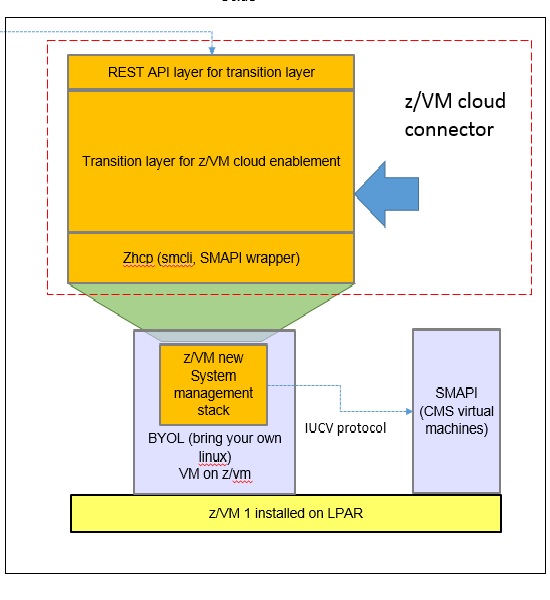
What about writing a terraform Feilong provider, just like we have the terraform libvirt provider? That would allow to transparently call Feilong from your main.tf files to deploy and destroy resources on your z/VM system.
Goal for Hackweek 23
I would like to be able to easily deploy and provision VMs automatically on a z/VM system, in a way that people might enjoy even outside of SUSE.
My technical preference is to write a terraform provider plugin, as it is the approach that involves the least software components for our deployments, while remaining clean, and compatible with our existing development infrastructure.
Goals for Hackweek 24
Feilong provider works and is used internally by SUSE Manager team. Let's push it forward!
Let's add support for fiberchannel disks and multipath.
Goals for Hackweek 25
Modernization, maturity, and maintenance: support for SLES 16 and openTofu, new API calls, fixes...
Resources
Outcome
Updatecli Autodiscovery supporting WASM plugins by olblak
Description
Updatecli is a Golang Update policy engine that allow to write Update policies in YAML manifest. Updatecli already has a plugin ecosystem for common update strategies such as automating Dockerfile or Kubernetes manifest from Git repositories.
This is what we call autodiscovery where Updatecli generate manifest and apply them dynamically based on some context.
Obviously, the Updatecli project doesn't accept plugins specific to an organization.
I saw project using different languages such as python, C#, or JS to generate those manifest.
It would be great to be able to share and reuse those specific plugins
During the HackWeek, I'll hang on the Updatecli matrix channel
https://matrix.to/#/#Updatecli_community:gitter.im
Goals
Implement autodiscovery plugins using WASM. I am planning to experiment with https://github.com/extism/extism
To build a simple WASM autodiscovery plugin and run it from Updatecli
Resources
- https://github.com/extism/extism
- https://github.com/updatecli/updatecli
- https://www.updatecli.io/docs/core/autodiscovery/
- https://matrix.to/#/#Updatecli_community:gitter.im
Create a Cloud-Native policy engine with notifying capabilities to optimize resource usage by gbazzotti
Description
The goal of this project is to begin the initial phase of development of an all-in-one Cloud-Native Policy Engine that notifies resource owners when their resources infringe predetermined policies. This was inspired by a current issue in the CES-SRE Team where other solutions seemed to not exactly correspond to the needs of the specific workloads running on the Public Cloud Team space.
The initial architecture can be checked out on the Repository listed under Resources.
Among the features that will differ this project from other monitoring/notification systems:
- Pre-defined sensible policies written at the software-level, avoiding a learning curve by requiring users to write their own policies
- All-in-one functionality: logging, mailing and all other actions are not required to install any additional plugins/packages
- Easy account management, being able to parse all required configuration by a single JSON file
- Eliminate integrations by not requiring metrics to go through a data-agreggator
Goals
- Create a minimal working prototype following the workflow specified on the documentation
- Provide instructions on installation/usage
- Work on email notifying capabilities
Resources
OpenPlatform Self-Service Portal by tmuntan1
Description
In SUSE IT, we developed an internal developer platform for our engineers using SUSE technologies such as RKE2, SUSE Virtualization, and Rancher. While it works well for our existing users, the onboarding process could be better.
To improve our customer experience, I would like to build a self-service portal to make it easy for people to accomplish common actions. To get started, I would have the portal create Jira SD tickets for our customers to have better information in our tickets, but eventually I want to add automation to reduce our workload.
Goals
- Build a frontend website (Angular) that helps customers create Jira SD tickets.
- Build a backend (Rust with Axum) for the backend, which would do all the hard work for the frontend.
Resources (SUSE VPN only)
- development site: https://ui-dev.openplatform.suse.com/login?returnUrl=%2Fopenplatform%2Fforms
- https://gitlab.suse.de/itpe/core/open-platform/op-portal/backend
- https://gitlab.suse.de/itpe/core/open-platform/op-portal/frontend
Cluster API Provider for Harvester by rcase
Project Description
The Cluster API "infrastructure provider" for Harvester, also named CAPHV, makes it possible to use Harvester with Cluster API. This enables people and organisations to create Kubernetes clusters running on VMs created by Harvester using a declarative spec.
The project has been bootstrapped in HackWeek 23, and its code is available here.
Work done in HackWeek 2023
- Have a early working version of the provider available on Rancher Sandbox : *DONE *
- Demonstrated the created cluster can be imported using Rancher Turtles: DONE
- Stretch goal - demonstrate using the new provider with CAPRKE2: DONE and the templates are available on the repo
DONE in HackWeek 24:
- Add more Unit Tests
- Improve Status Conditions for some phases
- Add cloud provider config generation
- Testing with Harvester v1.3.2
- Template improvements
- Issues creation
DONE in 2025 (out of Hackweek)
- Support of ClusterClass
- Add to
clusterctlcommunity providers, you can add it directly withclusterctl - Testing on newer versions of Harvester v1.4.X and v1.5.X
- Support for
clusterctl generate cluster ... - Improve Status Conditions to reflect current state of Infrastructure
- Improve CI (some bugs for release creation)
Goals for HackWeek 2025
- FIRST and FOREMOST, any topic is important to you
- Add e2e testing
- Certify the provider for Rancher Turtles
- Add Machine pool labeling
- Add PCI-e passthrough capabilities.
- Other improvement suggestions are welcome!
Thanks to @isim and Dominic Giebert for their contributions!
Resources
Looking for help from anyone interested in Cluster API (CAPI) or who wants to learn more about Harvester.
This will be an infrastructure provider for Cluster API. Some background reading for the CAPI aspect:
Technical talks at universities by agamez
Description
This project aims to empower the next generation of tech professionals by offering hands-on workshops on containerization and Kubernetes, with a strong focus on open-source technologies. By providing practical experience with these cutting-edge tools and fostering a deep understanding of open-source principles, we aim to bridge the gap between academia and industry.
For now, the scope is limited to Spanish universities, since we already have the contacts and have started some conversations.
Goals
- Technical Skill Development: equip students with the fundamental knowledge and skills to build, deploy, and manage containerized applications using open-source tools like Kubernetes.
- Open-Source Mindset: foster a passion for open-source software, encouraging students to contribute to open-source projects and collaborate with the global developer community.
- Career Readiness: prepare students for industry-relevant roles by exposing them to real-world use cases, best practices, and open-source in companies.
Resources
- Instructors: experienced open-source professionals with deep knowledge of containerization and Kubernetes.
- SUSE Expertise: leverage SUSE's expertise in open-source technologies to provide insights into industry trends and best practices.
The Agentic Rancher Experiment: Do Androids Dream of Electric Cattle? by moio
Rancher is a beast of a codebase. Let's investigate if the new 2025 generation of GitHub Autonomous Coding Agents and Copilot Workspaces can actually tame it. 
The Plan
Create a sandbox GitHub Organization, clone in key Rancher repositories, and let the AI loose to see if it can handle real-world enterprise OSS maintenance - or if it just hallucinates new breeds of Kubernetes resources!
Specifically, throw "Agentic Coders" some typical tasks in a complex, long-lived open-source project, such as:
❥ The Grunt Work: generate missing GoDocs, unit tests, and refactorings. Rebase PRs.
❥ The Complex Stuff: fix actual (historical) bugs and feature requests to see if they can traverse the complexity without (too much) human hand-holding.
❥ Hunting Down Gaps: find areas lacking in docs, areas of improvement in code, dependency bumps, and so on.
If time allows, also experiment with Model Context Protocol (MCP) to give agents context on our specific build pipelines and CI/CD logs.
Why?
We know AI can write "Hello World." and also moderately complex programs from a green field. But can it rebase a 3-month-old PR with conflicts in rancher/rancher? I want to find the breaking point of current AI agents to determine if and how they can help us to reduce our technical debt, work faster and better. At the same time, find out about pitfalls and shortcomings.
The CONCLUSION!!!
A  State of the Union document was compiled to summarize lessons learned this week. For more gory details, just read on the diary below!
Rancher/k8s Trouble-Maker by tonyhansen
Project Description
When studying for my RHCSA, I found trouble-maker, which is a program that breaks a Linux OS and requires you to fix it. I want to create something similar for Rancher/k8s that can allow for troubleshooting an unknown environment.
Goals for Hackweek 25
- Update to modern Rancher and verify that existing tests still work
- Change testing logic to populate secrets instead of requiring a secondary script
- Add new tests
Goals for Hackweek 24 (Complete)
- Create a basic framework for creating Rancher/k8s cluster lab environments as needed for the Break/Fix
- Create at least 5 modules that can be applied to the cluster and require troubleshooting
Resources
- https://github.com/celidon/rancher-troublemaker
- https://github.com/rancher/terraform-provider-rancher2
- https://github.com/rancher/tf-rancher-up
- https://github.com/rancher/quickstart