
Project Description
Get practice in Golang targeting some "good first issue" on open source projects. You can find some of them in Resources
Goal for this Hackweek
Get as much PR accepted as possible !!
Resources
- https://github.com/uyuni-project/uyuni-tools/issues
- https://github.com/containers/podman/labels/Good%20First%20Issue
- https://github.com/ethereum/go-ethereum/labels/good%20first%20issue
- https://github.com/go-gitea/gitea/labels/good%20first%20issue
- ...


This project is part of:
Hack Week 23
Activity
Comments
Be the first to comment!
Similar Projects
terraform-provider-feilong by e_bischoff
Project Description
People need to test operating systems and applications on s390 platform. While this is straightforward with KVM, this is very difficult with z/VM.
IBM Cloud Infrastructure Center (ICIC) harnesses the Feilong API, but you can use Feilong without installing ICIC(see this schema).
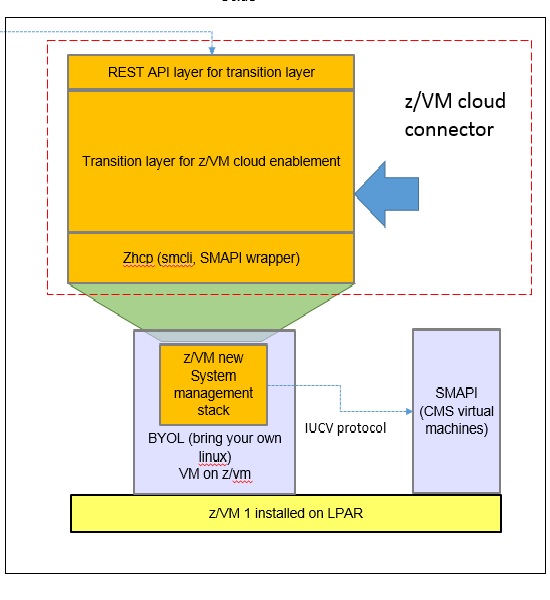
What about writing a terraform Feilong provider, just like we have the terraform libvirt provider? That would allow to transparently call Feilong from your main.tf files to deploy and destroy resources on your z/VM system.
Goal for Hackweek 23
I would like to be able to easily deploy and provision VMs automatically on a z/VM system, in a way that people might enjoy even outside of SUSE.
My technical preference is to write a terraform provider plugin, as it is the approach that involves the least software components for our deployments, while remaining clean, and compatible with our existing development infrastructure.
Goals for Hackweek 24
Feilong provider works and is used internally by SUSE Manager team. Let's push it forward!
Let's add support for fiberchannel disks and multipath.
Goals for Hackweek 25
Modernization, maturity, and maintenance: support for SLES 16 and openTofu, new API calls, fixes...
Resources
Outcome
Create a Cloud-Native policy engine with notifying capabilities to optimize resource usage by gbazzotti
Description
The goal of this project is to begin the initial phase of development of an all-in-one Cloud-Native Policy Engine that notifies resource owners when their resources infringe predetermined policies. This was inspired by a current issue in the CES-SRE Team where other solutions seemed to not exactly correspond to the needs of the specific workloads running on the Public Cloud Team space.
The initial architecture can be checked out on the Repository listed under Resources.
Among the features that will differ this project from other monitoring/notification systems:
- Pre-defined sensible policies written at the software-level, avoiding a learning curve by requiring users to write their own policies
- All-in-one functionality: logging, mailing and all other actions are not required to install any additional plugins/packages
- Easy account management, being able to parse all required configuration by a single JSON file
- Eliminate integrations by not requiring metrics to go through a data-agreggator
Goals
- Create a minimal working prototype following the workflow specified on the documentation
- Provide instructions on installation/usage
- Work on email notifying capabilities
Resources
Create a go module to wrap happy-compta.fr by cbosdonnat
Description
https://happy-compta.fr is a tool for french work councils simple book keeping. While it does the job, it has no API to work with and it is tedious to enter loads of operations.
Goals
Write a go client module to be used as an API to programmatically manipulate the tool.
Writing an example tool to load data from a CSV file would be good too.
Updatecli Autodiscovery supporting WASM plugins by olblak
Description
Updatecli is a Golang Update policy engine that allow to write Update policies in YAML manifest. Updatecli already has a plugin ecosystem for common update strategies such as automating Dockerfile or Kubernetes manifest from Git repositories.
This is what we call autodiscovery where Updatecli generate manifest and apply them dynamically based on some context.
Obviously, the Updatecli project doesn't accept plugins specific to an organization.
I saw project using different languages such as python, C#, or JS to generate those manifest.
It would be great to be able to share and reuse those specific plugins
During the HackWeek, I'll hang on the Updatecli matrix channel
https://matrix.to/#/#Updatecli_community:gitter.im
Goals
Implement autodiscovery plugins using WASM. I am planning to experiment with https://github.com/extism/extism
To build a simple WASM autodiscovery plugin and run it from Updatecli
Resources
- https://github.com/extism/extism
- https://github.com/updatecli/updatecli
- https://www.updatecli.io/docs/core/autodiscovery/
- https://matrix.to/#/#Updatecli_community:gitter.im
Rewrite Distrobox in go (POC) by fabriziosestito
Description
Rewriting Distrobox in Go.
Main benefits:
- Easier to maintain and to test
- Adapter pattern for different container backends (LXC, systemd-nspawn, etc.)
Goals
- Build a minimal starting point with core commands
- Keep the CLI interface compatible: existing users shouldn't notice any difference
- Use a clean Go architecture with adapters for different container backends
- Keep dependencies minimal and binary size small
- Benchmark against the original shell script
Resources
- Upstream project: https://github.com/89luca89/distrobox/
- Distrobox site: https://distrobox.it/
- ArchWiki: https://wiki.archlinux.org/title/Distrobox
Create a go module to wrap happy-compta.fr by cbosdonnat
Description
https://happy-compta.fr is a tool for french work councils simple book keeping. While it does the job, it has no API to work with and it is tedious to enter loads of operations.
Goals
Write a go client module to be used as an API to programmatically manipulate the tool.
Writing an example tool to load data from a CSV file would be good too.
HTTP API for nftables by crameleon
Background
The idea originated in https://progress.opensuse.org/issues/164060 and is about building RESTful API which translates authorized HTTP requests to operations in nftables, possibly utilizing libnftables-json(5).
Originally, I started developing such an interface in Go, utilizing https://github.com/google/nftables. The conversion of string networks to nftables set elements was problematic (unfortunately no record of details), and I started a second attempt in Python, which made interaction much simpler thanks to native nftables Python bindings.
Goals
- Find and track the issue with google/nftables
- Revisit and polish the Go or Python code (prefer Go, but possibly depends on implementing missing functionality), primarily the server component
- Finish functionality to interact with nftables sets (retrieving and updating elements), which are of interest for the originating issue
- Align test suite
- Packaging
Resources
- https://git.netfilter.org/nftables/tree/py/src/nftables.py
- https://git.com.de/Georg/nftables-http-api (to be moved to GitHub)
- https://build.opensuse.org/package/show/home:crameleon:containers/pytest-nftables-container
Results
- Started new https://github.com/tacerus/nftables-http-api.
- First Go nftables issue was related to set elements needing to be added with different start and end addresses - coincidentally, this was recently discovered by someone else, who added a useful helper function for this: https://github.com/google/nftables/pull/342.
- Further improvements submitted: https://github.com/google/nftables/pull/347.
Side results
Upon starting to unify the structure and implementing more functionality, missing JSON output support was noticed for some subcommands in libnftables. Submitted patches here as well:
- https://lore.kernel.org/netfilter-devel/20251203131736.4036382-2-georg@syscid.com/T/#u
Contribute to terraform-provider-libvirt by pinvernizzi
Description
The SUSE Manager (SUMA) teams' main tool for infrastructure automation, Sumaform, largely relies on terraform-provider-libvirt. That provider is also widely used by other teams, both inside and outside SUSE.
It would be good to help the maintainers of this project and give back to the community around it, after all the amazing work that has been already done.
If you're interested in any of infrastructure automation, Terraform, virtualization, tooling development, Go (...) it is also a good chance to learn a bit about them all by putting your hands on an interesting, real-use-case and complex project.
Goals
- Get more familiar with Terraform provider development and libvirt bindings in Go
- Solve some issues and/or implement some features
- Get in touch with the community around the project
Resources
- CONTRIBUTING readme
- Go libvirt library in use by the project
- Terraform plugin development
- "Good first issue" list
A CLI for Harvester by mohamed.belgaied
Harvester does not officially come with a CLI tool, the user is supposed to interact with Harvester mostly through the UI. Though it is theoretically possible to use kubectl to interact with Harvester, the manipulation of Kubevirt YAML objects is absolutely not user friendly. Inspired by tools like multipass from Canonical to easily and rapidly create one of multiple VMs, I began the development of Harvester CLI. Currently, it works but Harvester CLI needs some love to be up-to-date with Harvester v1.0.2 and needs some bug fixes and improvements as well.
Project Description
Harvester CLI is a command line interface tool written in Go, designed to simplify interfacing with a Harvester cluster as a user. It is especially useful for testing purposes as you can easily and rapidly create VMs in Harvester by providing a simple command such as:
harvester vm create my-vm --count 5
to create 5 VMs named my-vm-01 to my-vm-05.

Harvester CLI is functional but needs a number of improvements: up-to-date functionality with Harvester v1.0.2 (some minor issues right now), modifying the default behaviour to create an opensuse VM instead of an ubuntu VM, solve some bugs, etc.
Github Repo for Harvester CLI: https://github.com/belgaied2/harvester-cli
Done in previous Hackweeks
- Create a Github actions pipeline to automatically integrate Harvester CLI to Homebrew repositories: DONE
- Automatically package Harvester CLI for OpenSUSE / Redhat RPMs or DEBs: DONE
Goal for this Hackweek
The goal for this Hackweek is to bring Harvester CLI up-to-speed with latest Harvester versions (v1.3.X and v1.4.X), and improve the code quality as well as implement some simple features and bug fixes.
Some nice additions might be: * Improve handling of namespaced objects * Add features, such as network management or Load Balancer creation ? * Add more unit tests and, why not, e2e tests * Improve CI * Improve the overall code quality * Test the program and create issues for it
Issue list is here: https://github.com/belgaied2/harvester-cli/issues
Resources
The project is written in Go, and using client-go the Kubernetes Go Client libraries to communicate with the Harvester API (which is Kubernetes in fact).
Welcome contributions are:
- Testing it and creating issues
- Documentation
- Go code improvement
What you might learn
Harvester CLI might be interesting to you if you want to learn more about:
- GitHub Actions
- Harvester as a SUSE Product
- Go programming language
- Kubernetes API
- Kubevirt API objects (Manipulating VMs and VM Configuration in Kubernetes using Kubevirt)
Rewrite Distrobox in go (POC) by fabriziosestito
Description
Rewriting Distrobox in Go.
Main benefits:
- Easier to maintain and to test
- Adapter pattern for different container backends (LXC, systemd-nspawn, etc.)
Goals
- Build a minimal starting point with core commands
- Keep the CLI interface compatible: existing users shouldn't notice any difference
- Use a clean Go architecture with adapters for different container backends
- Keep dependencies minimal and binary size small
- Benchmark against the original shell script
Resources
- Upstream project: https://github.com/89luca89/distrobox/
- Distrobox site: https://distrobox.it/
- ArchWiki: https://wiki.archlinux.org/title/Distrobox